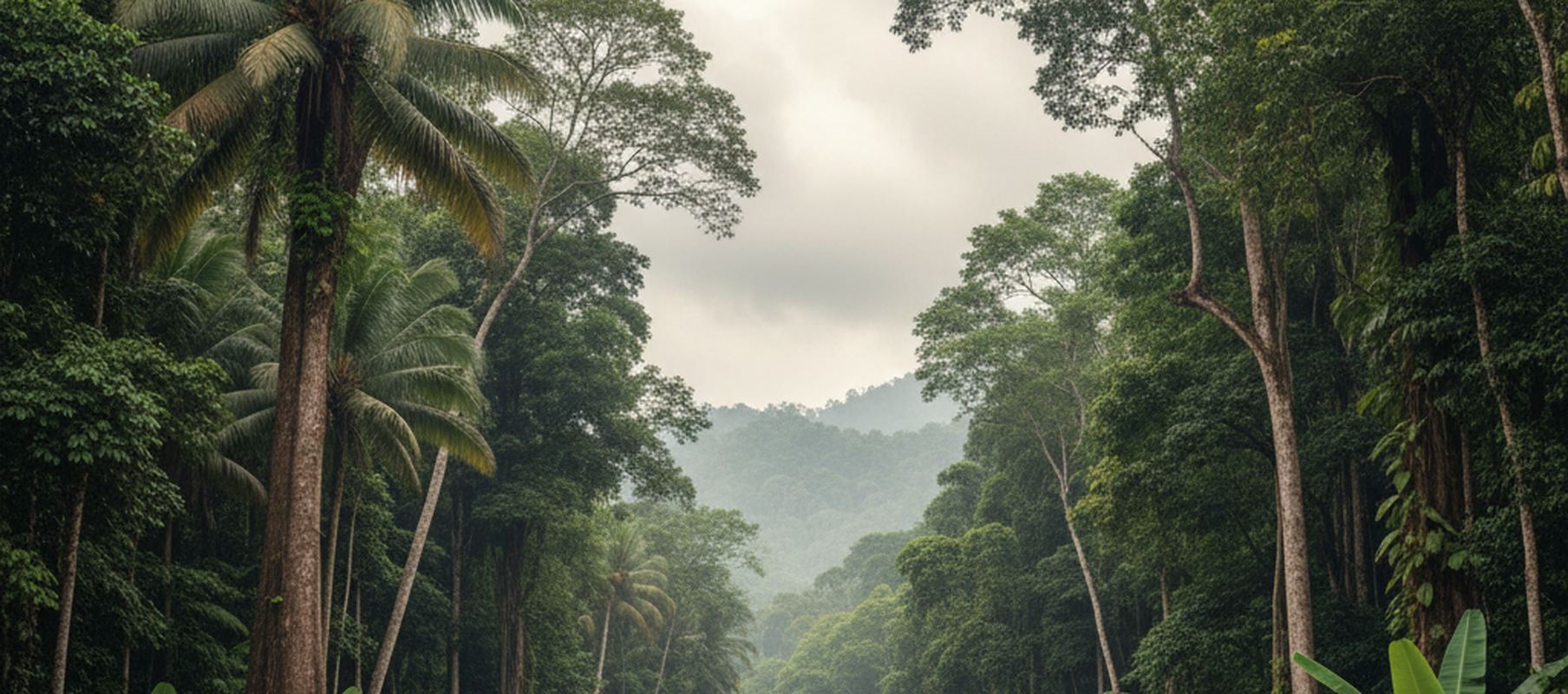
The first four nights, on the Tembeling
The Taman Negara and Kuala Lipis vacation package opens at a concrete ramp on the river at Kuala Tembeling, which is a shed, a car park and a lot of people sitting on their bags. Boats go upriver at nine in the morning and at two in the afternoon, and at no other hour. The run is about 60 km and takes two to three hours, longer when the water is low and the boatman has to pick his way between gravel banks. You sit on a plank in a long wooden boat with a roof over it, close enough to the surface to put your hand in.
Kuala Tahan is a village on one bank and the park office is on the other. You cross in a small boat that goes back and across all day for a coin or two. Your permit comes from a counter on the park side that keeps working hours, so if you take the afternoon boat you land with the counter already shut and you do the paperwork in the morning. Rain arrives most afternoons and it arrives hard. The floating restaurants are pontoons tied to the bank, they move when the river moves, and you will eat on them most nights.
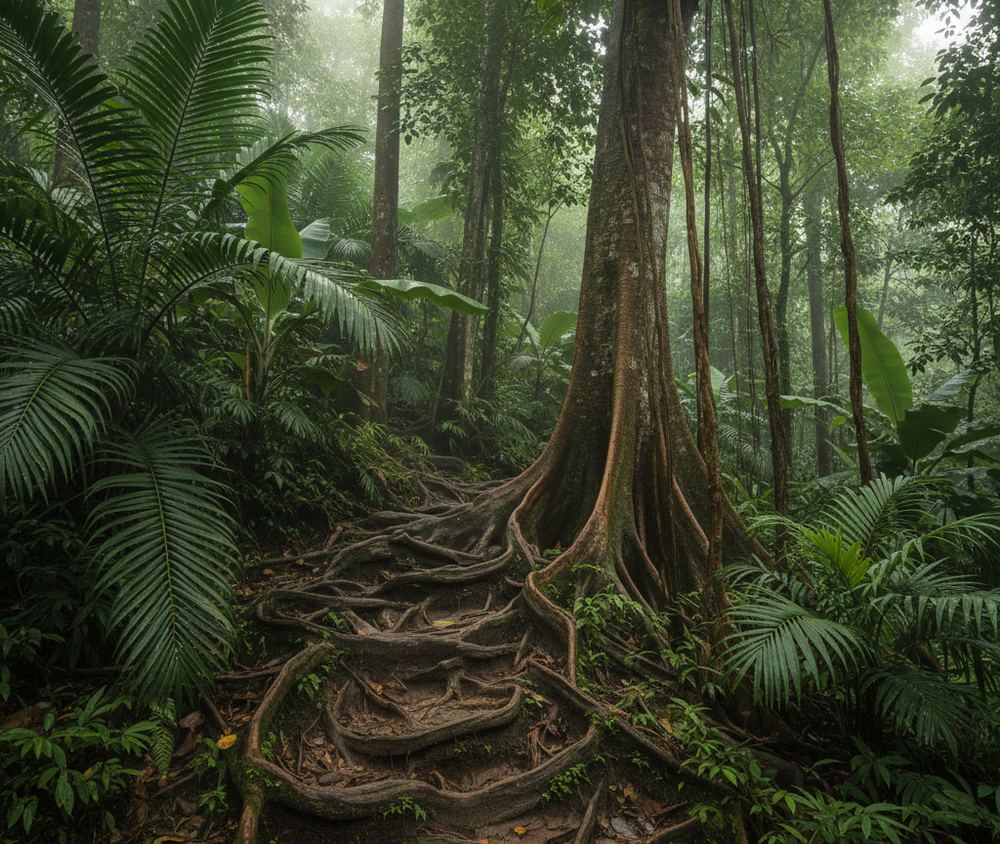
Four days run on other people's clocks
Here is the plain part. This is a rainforest and most people who come here see very little. You will hear a great deal, especially after dark, and you will see insects, leeches on your ankles after a wet walk, and the backs of some birds going away from you. Tigers and elephants live in the park. You are not going to see them. Anyone who arrives with a list of creatures to tick off will spend four nights being quietly disappointed, and no amount of money changes that.
The canopy walkway is a strung bridge about 530 m long, hung between trees, and you cross it in one direction only. It opens for a set stretch of the day and it lets nobody on late, so it is a morning job. Bukit Teresek is 334 m and the walk up is easy until it is not: the last part is roots and rope and your own hands. What you can see from the bare ground at the crown depends entirely on the air that morning, and we do not promise you anything about it.
The guided night walk leaves once, at an hour the park sets, and it goes whether you are ready or not. The hide at the salt lick is a wooden box on legs, a walk from the village; you carry your own water and bedding, you lie on a platform, and the honest outcome is a night of noises and an empty clearing at dawn. Lata Berkoh is a set of rapids up the Tahan, reached by a boat that local boatmen run on their own terms and their own reading of the water. They call it off when the river is wrong, and they are right to.
Two nights on the Jelai
Kuala Lipis sits where the Lipis runs into the Jelai, and the word kuala means exactly that meeting. It was the capital of Pahang from 1898 and it lost the job to Kuantan in 1955, which is why a town this size has a hill covered in buildings meant to run a state. The district offices are up there, the Pahang Club, Clifford School, and the Resident's old house, which now takes paying guests and keeps a few rooms of exhibits.
Down at street level there is one long street of shophouses and a covered market where the fish come in early and the place has thinned out by mid morning. Gold brought people here before the British did, and gold still comes out of the ground in this district, though not anywhere you can walk to. Two nights is the right length. One night and you are only sleeping; three and you have read every plaque twice.
The station is the reason the town exists in this shape, and it has been standing for more than a century. The line through the interior puts only a handful of services a day through here, and some of them come and go in the dark. If you are carrying on north or south by train afterwards, you build your last day around that sheet of times, not the other way round.
Who this suits
This suits somebody who can sit still. A lot of the week is waiting: for a boat, for a counter to open, for rain to finish, for a bus. If that reads as wasted time to you, the trip will annoy you from the first morning. It suits people who are content to walk in heat and high damp, get soaked, and come home with photographs of trees.
Anyone who likes settling the day over breakfast will find almost nothing here to settle. Almost nothing here can be moved. It does not suit anyone who needs to see animals, which is worth saying twice. And it does not suit anyone who wants a town with something going on after dark, because Kuala Lipis closes early and Kuala Tahan closes earlier.
The move in the middle
You do not go back down the river. There is a road into Kuala Tahan now, and day five uses it. The first bus out of the village leaves about half past seven in the morning, which is to say packing in the dark and eating afterwards. It is roughly 67 km of narrow road with plantation on both sides and it takes about an hour and three quarters, so you are standing at Jerantut bus station in the middle of the morning with your bag at your feet and time on your hands.
The onward run to Kuala Lipis is about 60 km and takes a little over an hour. Three of them go each day, and the mid morning one is the one that works, so you are in Kuala Lipis around noon with the afternoon still in front of you. The later pairing does not join up: take the ten o'clock off the park road and you sit at Jerantut until half past three and arrive with the light going. That is the whole reason day five starts early.
- How
- Road, in two legs, with a change at Jerantut
- How long
- About three hours moving, and close to four and a half once the change at Jerantut is counted. Roughly 67 km down the park road, then about 60 km on.
- How often
- Four departures a day leave Kuala Tahan for Jerantut. Three a day run on from Jerantut to Kuala Lipis. Only the early pairing joins up without losing the afternoon.
- Who runs it
- Two separate local road operators, one on each leg. Neither of them works for this office, and each carries you under its own conditions.
Each end taken by itself
- Taman Negara vacation package, 4 nights, $1,340 on its own
- Reserve the Kuala Lipis vacation package, 2 nights, $610 on its own
Six nights in the Pahang interior, four in rainforest and two in a river town that used to run the state, with every day of it hung on somebody else's timetable.
Clocks that run this pair
- Day one. Road to the jetty at Kuala Tembeling and the boat upriver, at nine or at two, nothing in between. Two to three hours on the water, then the crossing to Kuala Tahan and your room.
- Days two to four. The canopy walkway in the morning, Bukit Teresek on its own day, one night walk at the hour the park sets, one night in the hide if you want it, and the Lata Berkoh boat if the river allows.
- Day five. The first bus off the park road leaves Kuala Tahan about half past seven and reaches Jerantut in roughly an hour and three quarters. You wait at the bus station, then take the mid morning run on to Kuala Lipis and arrive near midday.
- Day six. The hill, the district offices, the covered market early, the station, and the long street of shophouses. No transport to catch all day, which after five days is the point.
- Day seven. Out of Kuala Lipis on your own arrangements, by road or on the interior line. We give you the times; the seats after this week are yours to buy.
What the figure holds and what it leaves to you
Held inside the figure
- Six nights of rooms, four at Kuala Tahan and two in Kuala Lipis, priced for two people sharing one room.
- The road leg to the Kuala Tembeling jetty on day one, and seats on the upriver boat.
- Park entry and camera permits, with the counter visit sorted on the morning after you land.
- One guided night walk at its set hour, and a booked place in the Tahan hide for one night.
- Both road legs on day five, with seats held on the early departures that actually connect.
- A written sheet of every departure time the week hangs on, reissued in the days before you travel.
Left outside it, on purpose
- Everything that gets you to Malaysia and home again. This price is ground only and begins when you reach Pahang.
- Any flight, and any passage by sea. This office arranges neither, in this country or any other.
- Meals beyond what your rooms include. The floating restaurants at Kuala Tahan are paid on the spot, in ringgit.
- The Lata Berkoh boat, which is chartered from local boatmen by the boat and split between whoever is aboard that day.
- Any visit to the Batek settlement. That is an arrangement made with the community by people on the ground, and it is not something this office writes into a week.
- Onward travel from Kuala Lipis after the sixth night, including any seat on the interior line and any road transport south.
A price on this site covers the ground only: the rooms, the named transfers between them, and the people who meet you. It does not cover getting to the country or leaving it.
From $1,950 per person, two people sharing one room, ground only. The six nights are the four and the two added together, and joining them does not move the number. The figure is confirmed to you in writing when you book, once we have checked the room nights and the departures against your dates.
The months this pair holds together
It rains here in every month of the year, and we are not going to promise you a dry week. The drier stretch across the interior runs roughly February to September, and most visitors come between April and August. Even then, afternoons often go dark and loud, and you walk back wet.
Late in the year the rain settles in and the river runs high and fast. That is the part that matters, because the upriver boat, the crossing at Kuala Tahan and the Lata Berkoh trip are all decided by water level by people who work on that river, and they call things off without apology. If you book November to January you are accepting that some of the week may not happen as written.
Asked about this one more than once
- Will I see wildlife in Taman Negara?
Probably not much. The park is thick forest across more than four thousand square kilometers, and the animals have somewhere else to be. Most visitors go home having seen insects, a few birds and an enormous quantity of leaves. People do get lucky at the salt lick, and luck is the correct word. Build the week around walking and rivers and treat anything with fur as a surprise.
- Do we go back down the river to leave the park?
No. There is a road into Kuala Tahan and day five uses it. The boat is how you arrive, not how you go. Boats do run back down to Kuala Tembeling, but from there you would still need road transport into Jerantut, and the direct bus off the park road puts you in Kuala Lipis by early afternoon instead of at dusk.
- Is this less money than booking the two places separately?
No. The price is the four nights and the two nights added together, exactly, and nothing comes off for putting them side by side. The reason this pair is on the list is the road. Jerantut sits between the two and the morning buses connect there, so the join costs you one manageable morning rather than a whole lost day.
Reserve a month rather than a date
Tell the office which month you have in mind and it will answer with what that month makes possible and what it shuts.