The market opens before you want to be awake
The first morning of the Kota Bharu vacation package starts at the central market, Pasar Siti Khadijah, because that is the only hour it is fully awake. The building is octagonal and four floors deep. The ground floor is wet: fish off the delta boats, greens, poultry, water running underfoot. You come in from the upper gallery and look down on the whole floor at once.
Most of the traders are women, and the market carries the name of a woman in trade. One floor up is dry food: serunding shredded and fried down to threads, jala mas and kuih tahi itik in trays, rice packed for the day. Two floors above that the goods are no longer edible. Nobody is performing for you. Buying is the whole point, and you will be in the way until you buy something.
We put you there early because the trade thins as the morning goes. How much is left by mid morning is not something anyone can promise you. If a slow start matters more to you than seeing the floor working, say so and we will move the market to your own clock and lose the rest.
The craft road runs about six miles north
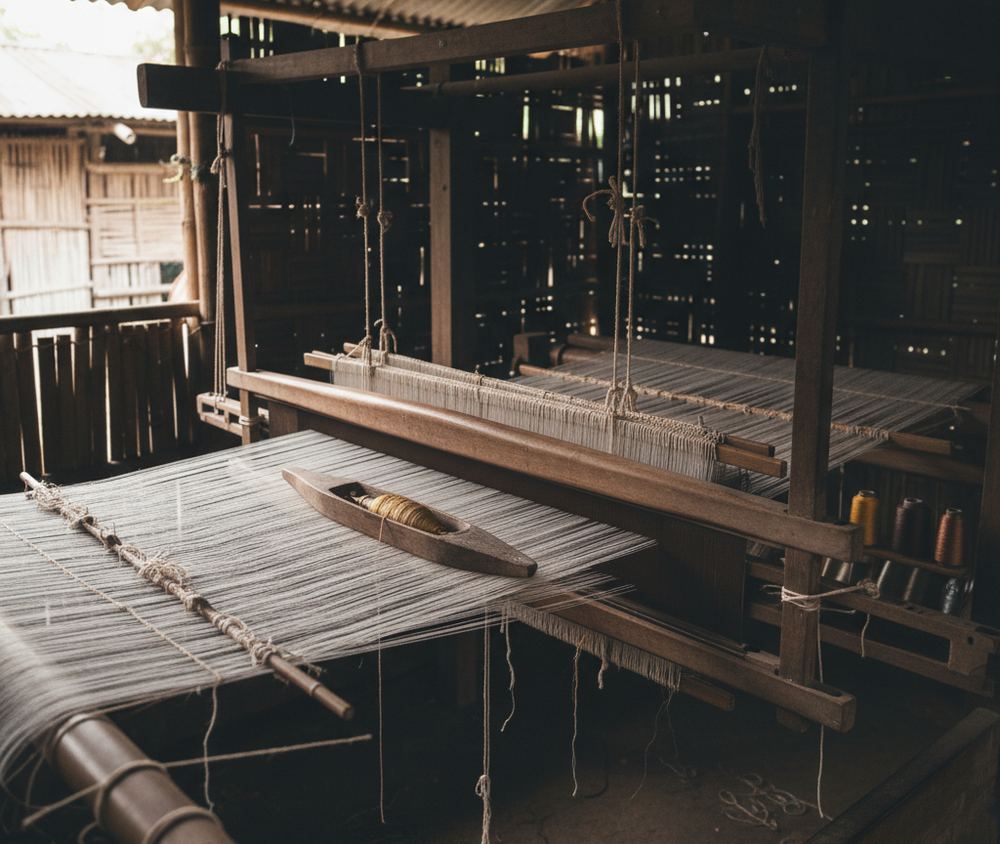
The road from town toward Pantai Cahaya Bulan runs about six miles north to the coast, and the villages strung along it are where Kelantan does its hand work. Kampung Penambang is the songket end of it. A songket loom carries silk or cotton, and the pattern is built by slipping metal thread between the weft rows, so the cloth catches light in bands rather than all over.
Batik here is printed with a copper block and waxed by hand before dyeing, and you will smell the wax before you see the frame. Brass work and silver are along the same road. The kite makers build wau: split bamboo ribs, paper cut in layers, and the wau bulan runs about eight feet across the spread. Several carry a bow at the head that sounds in the wind.
These are working sheds on shop hours, and they close for the local weekend. That is the main reason about half of these days run on hours you did not set. We build the craft day around a day they are open, and if you want to linger at one loom the rest of the road gets cut. That is your call on the morning.
Museums around the padang, and two old games
Four or five collections sit within a short walk of Padang Merdeka. Istana Jahar was built in 1855 for a grandson of Sultan Muhammad the Second and now holds royal custom and ceremony. Nearby are the state museum, the royal museum, the Islamic museum, and the wartime memorial in the old bank building at Bank Kerapu. The handicraft village and craft museum sits in the same cluster.
Each keeps its own published days and all of them are shut on Friday, so the hours around them have to be planned rather than wandered into. None is large. Two hours covers the two you actually want, and the craft museum is the one that connects to the road north, because it shows the same weaving, batik, silver and carving under one roof with the stages laid out.
Two Kelantan traditions are worth understanding even if you do not catch them. Wayang kulit is shadow work: cut leather figures held against a lit screen by a dalang who voices everyone. Gasing is the other, a heavy hand carved hardwood spinner thrown flat off a cord about a yard long, then scooped onto a stand to keep it running. It belongs to the season after the rice is cut.
The river, and the rice plain behind it
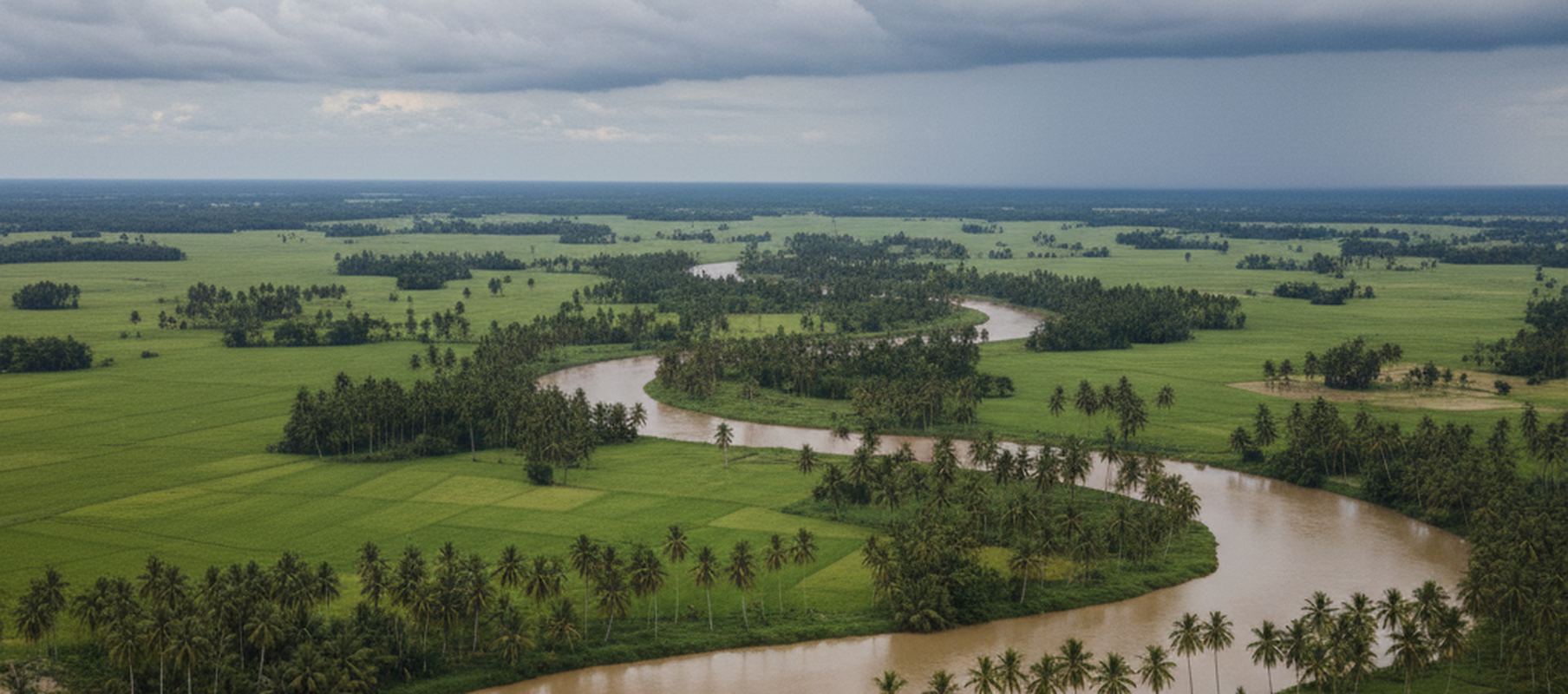
The Kelantan River runs about 154 miles down from the hills around Gua Musang and fans into a delta across the Tumpat and Kota Bharu districts. The floodplain behind it is among the most densely worked in the peninsula, and the paddy on it grows something like twelve percent of the country's rice. It is flat, and the water is brown most of the year.
The half day out here is the loosest part of the trip. A driver takes you over the river and along the bunds between fields, through villages toward Kuala Besar at the mouth, where the fishing boats come in and batik has been printed for generations. What you see depends on where the crop is standing: bare mud, shin high green, or heads bent and ready. Nobody controls that.
The cooking here leans sweet
Kelantan cooks sweeter than the rest of the peninsula, savory dishes included, and if you arrive expecting the chili forward food of the west coast you will spend a day adjusting. Nasi kerabu is the one people know: rice turned blue by butterfly pea flowers, a pile of raw herbs and shredded greens, fried chicken or dried fish, crackers, and you mix the whole plate before eating.
Nasi dagang is breakfast: rice steamed in coconut milk with fenugreek, a slightly purple local grain, tuna curry over it. Laksam is rolled rice flour sheets cut into lengths under a thick fish and coconut gravy, and the Kelantan version leans sweet. Ayam percik is chicken grilled under coconut. Budu, fermented anchovy, sits on the table and divides people immediately.
Who will not enjoy this: anyone who wants an evening program, and anyone who needs a kitchen open late. Kota Bharu eats early and shuts early. If you are traveling with somebody who will not eat rice at breakfast, or will not sit on a plastic stool in a market food court, this is three nights of quiet complaint.
What here answers to somebody else and not to you
- Kelantan does not keep a Saturday and Sunday weekend. The state works Sunday through Thursday and closes Friday and Saturday, Friday being the firmer of the two. A trip landing Thursday night can lose both the craft road and the museums before it starts.
- The museums around Padang Merdeka keep published hours, roughly half past eight in the morning until a quarter to five, and are shut on Friday. We reconfirm each one in the week before you travel, because small state collections change their days without notice.
- The market is a morning thing. Be there in the first hours of trade or accept a thinner floor.
- The cultural ground in town posts its own performance nights and does not run all year. We check what is actually scheduled for your dates and tell you plainly if the answer is nothing.
- Two fixed half days with a driver, both of them mornings. The remaining hours are yours, which is why this sits at three on our scale and not four.
The hatching beside each price says how much of the trip runs to somebody else's timetable: one line for none of it, four for a trip built around fixed departures from the first morning to the last.
What the figure holds and what it leaves to you
Held inside the figure
- Three nights in a plain town hotel, two people to one room, breakfast included. The 890 dollars is what one of those two people pays for the ground arrangements.
- A driver and car for two half days: the craft road north of town, and the rice plain and river mouth on the far bank.
- Your first morning walked through the central market with somebody who buys there, from the wet floor up through the dry goods.
- Entry to the museums around the padang on a day they are open, and the walk between them.
- One sit down Kelantan meal with the dishes explained, plus a second stop for nasi dagang at a morning counter.
- A written plan for all three days with the local closing days already worked in, and a pickup when you reach town.
Left outside it, on purpose
- Getting to Malaysia and up to this coast. We arrange no flights and no sea crossing, and nothing in this price carries you across a border.
- Meals other than the two named above. You will be eating in market stalls and shophouses and ordering for yourself.
- Anything you buy on the craft road. Batik lengths, songket, silver and a finished wau cost whatever the maker asks.
- The car outside those two half days. It is held for the mornings described and released afterward.
- Laundry, phone credit, drinks and anything else personal.
- Money for the driver and the workshop hosts, which is yours to judge.
A price on this site covers the ground only: the rooms, the named transfers between them, and the people who meet you. It does not cover getting to the country or leaving it.
Nothing is held until you have the three days in writing, with the local closing days, the museum shut day and your market morning already fixed against the dates you gave us.
The months this one is worth the journey
The northeast monsoon shuts much of this coast from November into February. Rain arrives in long heavy runs rather than afternoon showers, the Kelantan River overspills its banks in most of those seasons, roads flood, workshops close and the museums can close with the town. The basin takes something near sixty nine inches of rain across November to January against almost none from March to May. We would rather lose the booking than send you into that.
March through July is the drier stretch, and it is hot and humid right through. Local temperatures sit roughly between seventy and ninety degrees Fahrenheit, and midday is heavy going, which is the other reason the market and the craft road are morning work. Rain starts building again in August. None of this is a forecast and we will not dress it up as one.
What this one will join to
- the Pahang and Kelantan vacation package, A seat on the interior line, north from Kuala Lipis to Wakaf Bharu, then a short road transfer into Kota Bharu., Most of a daylight ride. We put the exact departure and arrival in writing when your seats are held rather than quoting you a number now.
- east coast Malaysia vacation package: Kota Bharu and Kuala Terengganu, Car and driver, coast road south on Federal Route 3, About two hours twenty minutes of driving, half a day if you stop
Send us your dates and we will come back with the days laid out hour by hour, or with a straight answer that your dates fall in the wet months.
Asked about this one more than once
- Why does the first morning start so early?
Because the market trades hardest in the first hours and thins after. We are not going to tell you the floor will be full, only that early is when it has the chance to be. If you would rather sleep, say so and we will rebuild the day around a later start and drop something else.
- What actually closes on the Kelantan weekend?
The state runs Sunday to Thursday. Friday is the firm closing day: the museums are shut, most of the workshops on the road north are not working, and state offices are closed. Saturday is patchier, with some shops open and some not. We build the craft day and the museum walk away from Friday and tell you what falls where.
- Do you arrange the flight into Kota Bharu?
No. We arrange ground only, and the price covers what happens after you arrive in town. Getting yourself to Malaysia and up to this coast is yours to sort out. We will tell you the arrival window that fits the plan we have written, and we will not book any part of the journey there.
Reserve a month rather than a date
Tell the office which month you have in mind and it will answer with what that month makes possible and what it shuts.